Cactus Succulent Embroidery Car Coaster Review
As a designer who has spent countless hours digitizing and testing machine embroidery design files, I approach every new asset with a critical eye. It is not just about whether the image looks cute on a screen; it is about how those lines translate into thread, tension, and texture on actual fabric. Recently, I evaluated the Cactus Succulent Embroidery Car Coaster to determine its viability for real-world projects. While the title suggests a specific automotive accessory application, my review focuses on the broader potential of this graphic within the realm of textile art and small business merchandise.
First Impressions and Visual Personality
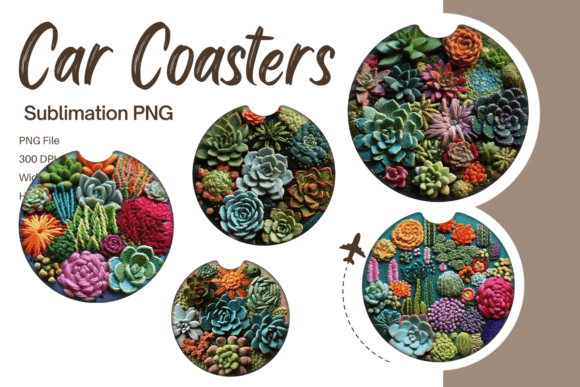
The immediate mood created by the Cactus Succulent Embroidery Car Coaster is one of calm, organic warmth. The layout features clean, botanical lines that evoke a modern desert aesthetic. For embroidery designers, this is a promising starting point. The shape is balanced, avoiding the chaotic asymmetry that often causes registration issues in smaller hoop sizes. The visual personality is versatile; it feels equally at home in a minimalist nursery or on a rugged outdoor tote.
What stands out is the detail level. It is intricate enough to look professional but not so dense that it becomes a nightmare to stitch out on standard home machines. When I visualize this as an applique design, I see potential for layered textures. However, if treated as a standard fill, the spacing between elements suggests a thoughtful approach to stitch density. This is crucial for maintaining the integrity of the fabric, especially when working with lighter materials.
Real-World Application: Beyond the Car Coaster
The product description notes that this listing is for a digital download intended for sublimation on car tags and coasters, explicitly stating it is NOT A SVG file. This distinction is vital. As a reviewer, I must clarify that while the source may be a print template, the aesthetic translates beautifully into embroidery for those who choose to digitize it or use it as a reference for custom work. Let us imagine a real-life scenario: a client requests a set of personalized gifts for a housewarming party. They want something trendy but timeless.
In this context, the cactus motif shines. I envision this design stitched onto a heavy canvas tote bag design. The rigid structure of the bag supports the weight of the threads, allowing the satin stitch outlines to pop against the textured background. Alternatively, consider sweatshirt embroidery. Placed on the left chest of a heather grey crewneck, the succulent adds a touch of nature-inspired elegance without overwhelming the garment. It transforms a basic piece of custom apparel into a boutique-quality item.
For Etsy sellers and craft business owners, versatility is key. This design could easily adapt to an embroidered patch for denim jackets or backpacks. The organic curves of the succulent leaves lend themselves well to running stitch details for veins, adding depth and dimension. It is not just a static image; it is a dynamic element that interacts with the fabric texture.
Technical Considerations for Stitching
While the design is visually appealing, practical execution requires attention to detail. One must consider the hoop size carefully. If you are adapting this from a print template to an embroidery file, ensure the scale fits your standard hoops, such as 4x4 or 5x7 inches. Scaling down too much can cause the finer details of the succulent spines to merge, resulting in a muddy appearance.
Fabric texture plays a significant role here. On smooth cotton or linen, the stitches will lie flat and crisp. However, on textured fabrics like terry cloth or thick fleece, you may need to adjust the underlay stitches to prevent sinking. For stretchy fabrics, such as those used in baby embroidery items like onesies, a cut-away stabilizer is non-negotiable to maintain shape after washing. Dark fabrics present another challenge; if the design relies on light thread colors, ensure high contrast. A test run on scrap fabric is essential to verify that the green hues of the cactus do not blend into navy or black backgrounds.
Furthermore, consider the stitch types. A mix of fill stitch for the body of the plant and satin stitch for the edges can create a professional finish. Avoid overly dense areas in the center of the succulent rosettes, as this can cause puckering. If you are creating a holiday embroidery gift, such as a kitchen towel, keep the design away from the hem to avoid interference with the sewing machine feed dogs.
Commercial Viability and Brand Consistency
For small shop product lines, consistency is everything. The Cactus Succulent Embroidery Car Coaster offers a cohesive look that can anchor a brand identity. Whether used on pillow covers, aprons, or tea towels, the botanical theme suggests eco-friendliness and mindfulness. This appeals to a specific demographic of buyers who value handmade quality and natural motifs.
When presenting this as a finished product, the visual appeal directly impacts customer trust. Clean stitching signals professionalism. If the design is used for commercial embroidery projects, such as corporate gifts or boutique branding, ensure that the license allows for such use. Since the original description specifies it is a template for sublimation, users interested in embroidery must verify their rights to modify and stitch the design for resale. Always check the exact licensing terms provided by the creator.
Using printable mockup tools can help visualize the final outcome before committing to thread. Compare how the design looks in both color and black-and-white mockups to assess its strength in silhouette. A strong silhouette ensures recognition even from a distance, which is vital for design assets used in marketing materials.
Practical Designer Notes
- Test First: Always stitch a sample on scrap fabric similar to your final material to check tension and density.
- Color Contrast: Verify that your chosen thread colors stand out against the fabric, especially for detailed areas.
- Stabilizer Selection: Use appropriate stabilizers based on fabric weight and stretch to prevent distortion.
- Licensing Check: Confirm whether the digital file permits commercial use for embroidered goods, as the primary description mentions sublimation.
- Hoop Placement: Ensure the design fits comfortably within your hoop without hitting the edges, allowing for proper clamping.
- Detail Inspection: Zoom in on the digital file to identify any tiny elements that may need simplification for smaller scales.
In conclusion, the Cactus Succulent Embroidery Car Coaster is a charming graphic with significant potential for textile adaptation. While originally marketed for sublimation on hard goods, its clean lines and organic theme make it an excellent candidate for machine embroidery design projects. By paying attention to technical details like stitch density, stabilizer choice, and fabric compatibility, designers and makers can transform this digital asset into high-value handmade product offerings. Whether for a personalized gift or a small business inventory staple, this design holds up under scrutiny, provided it is executed with care and precision.